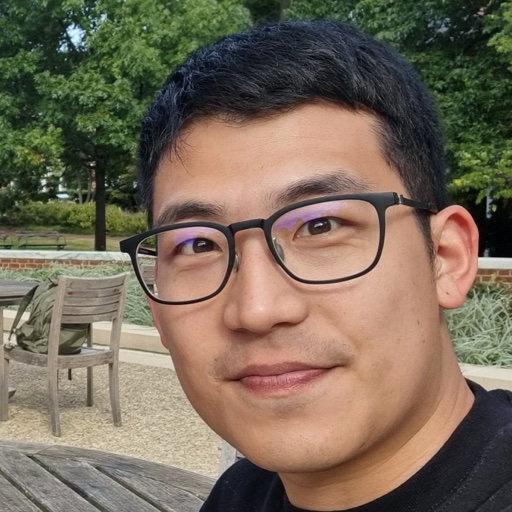
Youngrock Oh
About Me
I am a Deep Learning Optimization Lead at Mobilint, Inc. and hold a Ph.D. in Mathematics, with 5 years of experience specializing in SW/HW co-design for high-performance AI inference. My work is about bridging algorithmic logic with hardware constraints: I develop novel NPU-specific quantization algorithms, and I translate SOTA GPU-centric methods into production-grade C++.
I have contributed to next-generation hardware architecture by specifying data precision and quantization/de-quantization logic, which I validate through custom-built simulation frameworks. By combining sub-4-bit quantization with graph-level optimizations, I have achieved real-time LLM and VLM inference on low-power edge devices under 25 W. I direct an 8-person R&D team, where I guide technical direction and architect CI pipelines for quantization workflows so that deployments scale.
Before Mobilint, I was a Senior Engineer at Samsung SDS's AI Vision Lab and AI Advanced Research Lab (2019–2021), and I received my Ph.D. in Mathematical Sciences from KAIST in 2019.
Core Expertise
News
- [Feb 2026] Co-authored "ARIES and REGULUS" NPU SoC paper published at ISSCC 2026 (invited).
- [May 2023] Promoted to Deep Learning Optimization Team Lead at Mobilint, Inc.
Professional Experience
2023 — Present
- Deep Learning Optimization Team Lead (May 2023 ~ Present, Mobilint, Inc.)
AI semiconductor startup specializing in NPU solutions for edge AI.SW/HW co-design & architecture validation- Defined data precision and quantization/de-quantization logic for next-generation AI accelerators, ensuring hardware architectural constraints are met.
- Developed custom C++ simulation frameworks to validate hardware architectures and predict performance gains prior to silicon fabrication.
Inference optimization & deployment- Architected hardware-aware sub-4-bit PTQ/QAT algorithms, achieving a 2× inference speedup by exploiting specific NPU dataflows and architectural constraints.
- Prototyped the initial Speculative Decoding (EAGLE-3) and directed the team through full integration, delivering a 2×–3× acceleration in LLM inference speed.
- Achieved real-time sLLM inference on highly constrained hardware (ARIES) by bridging hardware-aware sub-4-bit quantization, validating the efficiency of optimized model–hardware stacks.
- Built the team's debugging tool for tracing accuracy degradation in optimized models, used to triage quantization regressions across the model portfolio.
ML systems & infrastructure impact- Led an 8-person engineering team to successfully quantize and deploy 15+ GenAI models (Llama3, Qwen, LG Exaone) across multiple NPU platforms.
- Reduced server costs by 66% for an AI Callbot service by replacing GPU infrastructure with optimized NPU systems, achieving lower latency than GPU benchmarks.
2021 — 2023
- Principal Researcher, Deep Learning Algorithm Team (May 2021 ~ Apr 2023, Mobilint, Inc.)
- Refactored and optimized the Post-Training Quantization (PTQ) codebase, improving the team's development efficiency and software maintainability.
- Developed Quantization Aware Training (QAT) algorithms specifically optimized for object detection on NPUs.
2019 — 2021
- Senior Engineer, AI Vision Lab & AI Advanced Research Lab (Mar 2019 ~ Apr 2021, Samsung SDS)
- Led a 3-person team to advance model interpretability, developing a novel evaluation metric (Lift CAM) based on SHAP value analysis (published at ICCV 2021).
- Formulated mathematical frameworks for confidence scoring to evaluate the reliability and robustness of deep neural networks against out-of-distribution (OOD) data.
- Engineered interpretability methods for graph neural networks to improve the transparency and evaluation of classification models.
Publications
J: Journal, C: Conference, D: Dissertation
2026
- [C] ARIES and REGULUS: A Unified and Scalable Hardware-Software Co-Designed NPU SoC Family for On-Device and On-Premises Multimodal Inference
D. Shin, H. Yang, S. Jeon, …, Youngrock Oh, et al.
IEEE International Solid-State Circuits Conference, San Francisco (invited). ISSCC 2026, Feb 2026.
2023
- [J] SEEN: Sharpening Explanations for Graph Neural Networks Using Explanations From Neighborhoods
H. Cho, Youngrock Oh, E. Jeong
Advances in Artificial Intelligence and Machine Learning, 3(2): 68, pp. 5782–5799, 2023. - [C] Mobilint's ARIES: Chip for Edge AI
Youngrock Oh, H. Jeon, J. Kim, et al.
ICCE Asia, Busan, Oct 2023.
2021
- [C] Towards Better Explanations of Class Activation Mapping
H. Jung, Youngrock Oh
IEEE/CVF International Conference on Computer Vision (Virtual). ICCV 2021, Oct 2021. - [C] EVET: Enhancing Visual Explanations of Deep Neural Networks Using Image Transformations
Youngrock Oh, H. Jung, J. Park, M. Kim
IEEE Winter Conference on Applications of Computer Vision (Virtual). WACV 2021, Jan 2021. - [C] Jointly Optimize Positive and Negative Saliencies for Black Box Classifiers
H. Jung, Youngrock Oh, J. Park, M. Kim
International Conference on Pattern Recognition Workshop, Explainable Deep Learning-AI (Virtual). ICPR 2020 WS, Jan 2021.
2020
- [J] Stochastic Geometry Analysis of the Correlation Between Consecutive Packet Transmission in WLAN
Youngrock Oh, Ganguk Hwang
Annals of Operations Research, vol. 293, No. 1, pp. 213–235, Oct 2020.
2019
- [D] Mathematical Modeling and Analysis for Adaptive Medium Access Protocols in Wireless Networks
Proposed an autonomous adaptive wireless communication protocol based on a mathematical analysis of the network traffic estimation method with a lazy random walk model.
2018
- [C] Spatial Modeling and Analysis of WLAN with Poisson Point Process
Youngrock Oh, Ganguk Hwang
International Conference on Queueing Theory and Network Applications, Tsukuba, Japan, Jul 2018. - [J] A New Autonomous Adaptive MAC Protocol in Wireless Networks
Youngrock Oh, Yunbae Kim, Jeongseop Kim, Ganguk Hwang, Seungkeun Park
IEEE Access, vol. 6, pp. 15155–15169, Apr 2018.
2016
- [C] A New Contention Based Adaptive MAC Protocol Based on The Renewal Access Protocol
Youngrock Oh, Yunbae Kim, Ganguk Hwang, Seungkeun Park
IEEE PIMRC, Valencia, Spain, Sep 2016.
Education
- Ph.D. in Mathematical Sciences (Mar 2015 ~ Feb 2019, KAIST, Daejeon, Korea)
Thesis: Mathematical Modeling and Analysis for Adaptive Medium Access Protocols in Wireless Networks. Advisor: Prof. Ganguk Hwang.
Research: stochastic geometry, stochastic processes, performance optimization of communication systems. - M.S. in Mathematical Sciences (Mar 2013 ~ Feb 2015, KAIST, Daejeon, Korea)
Thesis: Tail Asymptotics for the Sums of Independent Light-Tailed Random Variables. Advisor: Prof. Ganguk Hwang.
Research: stochastic processes, heavy-tailed distributions. - B.S. in Mathematical Sciences (Feb 2008 ~ Feb 2013, KAIST)
Minor: Financial Engineering Program.
Patents
International
- Quantization aware training method (gradient-independent update)
App. No. 18/334,460, filed 2023.06.14. - Method and apparatus for image analysis using image classification model
Reg. No. 11288549, 2022.03.29. - Method and apparatus for measuring confidence
Reg. No. 11176424, 2021.11.16.
Domestic (Korea)
- Apparatus and method for calculating importance of edge
App. No. 10-2021-0062057, 2021.05.13. - Method and apparatus for image analysis using image classification model
App. No. 10-2020-0058434, 2020.05.15. - Apparatus and method for metric learning
App. No. 10-2021-0067040, 2021.05.25. - Apparatus and method for enhancing accuracy for importance of each component in graph
App. No. 10-2021-0062066, 2021.05.13. - Method and apparatus for measuring confidence
App. No. 10-2019-0134243, 2019.10.28. - Quantization aware training method (gradient-independent update)
Reg. No. 10-238910, 2022.04.19. - Apparatus for data augmentation for quantization of neural network
App. No. 10-2022-0140357, 2022.10.27. - Method and apparatus for evaluating quantized artificial neural network
App. No. 10-2023-0172418, 2023.12.01. - Method for recognizing object based on non-maximum suppression
App. No. 10-2023-0194989, 2023.12.28.